


Mig Welding
Palletising | Welding | Material Handling | Logistics | Assembly | Machine Tending | Inspection | Painting & Coating | Injection Moulding | Healthcare
Bespoke welding solutions, built to handle a wide range of materials and components. Each system is designed around your process, offering the adaptability to work with varying part sizes, production volumes, and future upgrades. With straightforward integration and options for expansion, these cells give you a welding solution that can grow and change with your operation.
Unlock greater productivity and efficiency with our welding cells. Streamline your production by removing bottlenecks, cutting manufacturing costs, and achieving faster cycle times with consistent, high quality welds. Built to be scalable and future proof, our solutions grow alongside your business and adapt to changing demands.

Welding Fixtures
In robotic welding, weldment fixtures play a crucial role in achieving consistent accuracy and repeatability. They're often the make or break element in delivering high quality welds. At Rise Automation, we take a thorough approach, every fixture goes through detailed simulation and validation as part of our design process. This means you can expect reliable performance and consistent results from the outset.
This particular fixture is designed for near vertical loading, making a straightforward process to load and clamp parts into place. Once secured, the fixture can rotate during the weld cycle, giving the robot full access to both the front and rear of the panel. a smart, practical setup that's easy to work with and maximises weld coverage.
Key Benefits of Robotic Welding Solutions
Consistent High Quality
Robotic welding systems deliver repeatable, uniform welds across every part, helping to reduce defects, scrap and costly rework. Robots programmed with precise parameters ensure each joint meets tight tolerances and maintains strength and integrity.
Increased Productivity and Throughput
Unlike manual welders, robots can operate continuously without breaks, fatigue or shift changes, significantly increasing arc‑on time and overall output. Automated cells can even run unattended overnight or across weekends to maximise production capacity.
Enhanced Safety for Your Team
Welding exposes operators to intense heat, ultraviolet light, fumes and repetitive strain. Robotic welding removes staff from these hazardous environments, reducing workplace injuries and supporting safer, healthier conditions.
Greater Efficiency and Cost Savings
Although initial investment is higher than manual setups, robotic welding delivers compelling long‑term cost savings through reduced labour costs, improved material utilisation and lower rework rates. Many businesses see a fast return on investment through operational efficiencies.
Flexibility and Adaptability
With the right tooling and programming, robotic welding systems can handle a wide range of part sizes, configurations and production volumes. Offline programming tools also make it faster to adapt robots to new products or batch changes.
Tailored Robotic Welding Solutions With Rise Automation
At Rise Automation, we don’t just install welding robots, we engineer complete, integrated systems that work for you. From initial consultation to design, installation, and ongoing support, our robotic welding solutions are customised to your products, workflows and output targets.
Whether you need stand‑alone robot welding cells, fully automated production lines, or integration with existing conveyors, sensors and inspection systems, we ensure your investment delivers tangible performance improvements, safety gains and return on investment.

Welding Solutions we Offer

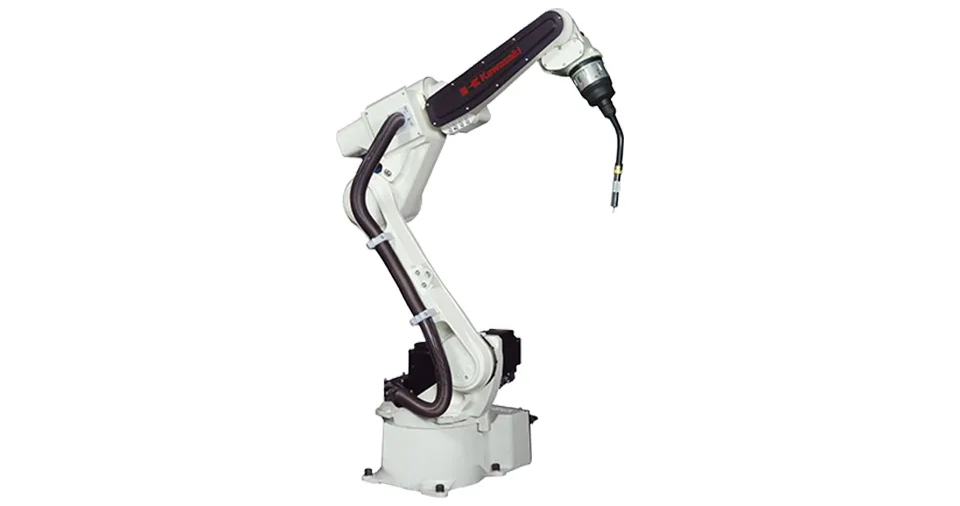
MIG Welding (Metal Inert Gas)
A fast, versatile welding process ideal for thick materials and high speed production. Widely used in automotive, fabrication, and general manufacturing.
Robotic Laser Welding
Combines pinpoint accuracy with high-speed operation, used in industries such as electronics, automotive, and medical device manufacturing.
TIG Welding (Tungsten Inert Gas)
Delivers precise, high quality welds with excellent control, perfect for thin materials, stainless steel, and critical applications in aerospace, medical, and food grade equipment.
Hybrid Welding Systems
Integrate multiple welding processes within a single cell to handle a variety of joints, materials, or product types, maximising flexibility and throughput.
Laser Welding
Provides extremely accurate, low heat welds with minimal distortion, ideal for fine components, electronics, and applications requiring tight tolerances and clean finishes.
Custom Welding Fixtures & Tooling
Designed to hold parts securely and repeatably, essential for maintaining weld quality and cycle time in automated systems.
Robotic MIG Welding
Automates high volume welds with consistent results, commonly used for structural assemblies, frames, and heavy duty metalwork.
Plasma Welding
A high-energy process suitable for deep, narrow welds on thicker materials. Often used in aerospace, power generation, and precision metal fabrication where weld integrity is critical.
Robotic TIG Welding
Ensures repeatable precision in sensitive or cosmetic welds, ideal for stainless and aluminium parts where appearance and integrity matter.
Robotic Spot Welding
Ideal for joining sheet metal components quickly and securely. Commonly used in automotive body assembly lines, delivering consistent weld quality and cycle time efficiency.
FAQs
What is robotic welding? Robotic welding uses programmable machines to perform welding tasks automatically. These systems improve accuracy, speed, and consistency in industrial welding processes.
What are the benefits of robotic welding? Robotic welding offers increased productivity, consistent weld quality, reduced waste, improved workplace safety, and lower long-term labour costs.
Which welding processes can be automated with robots? Common automated welding processes include MIG, TIG, spot welding, laser welding, and plasma welding.
Is robotic welding suitable for small to medium manufacturers? Yes, robotic welding systems are now more accessible and scalable, making them ideal for SMEs seeking cost-effective automation solutions.
What industries use robotic welding? Robotic welding is widely used in automotive manufacturing, metal fabrication, aerospace, construction, shipbuilding, and heavy machinery sectors.
What is the difference between MIG and TIG robotic welding? Robotic MIG welding is fast and suitable for thicker materials, while TIG welding offers greater precision for thinner materials or high-spec applications like stainless steel and aluminium.
How accurate is robotic welding compared to manual welding? Robotic welding delivers highly consistent and repeatable welds, with minimal variation, making it ideal for critical or high-volume applications.
Can robotic welding handle complex or multi-joint welds? Yes, with the right programming and tooling, robotic welders can manage complex joints, curves, and multi-position welding tasks.
What type of welding robots do you supply? We offer refurbished and new robotic welding systems from brands like Kawasaki, FANUC, KUKA, ABB, and Yaskawa, equipped for MIG, TIG, laser, and spot welding.
Do robotic welding systems reduce production costs? Absolutely. Robotic welding improves throughput, reduces rework, and lowers consumable and labour costs over time.
What materials can be welded using robots? Robotic systems can weld steel, stainless steel, aluminium, titanium, and more, depending on the process and torch configuration.
Can robotic welding be used for both high and low-volume production? Yes. While ideal for high-volume tasks, robotic welding can also be deployed in low to medium runs with flexible programming and quick-change tooling.
How safe is robotic welding? Robotic welding reduces operator exposure to fumes, heat, and arc flash, while integrated safety systems and enclosures ensure compliance with HSE standards.
Do you provide training for robotic welding systems? Yes, we offer operator training, programming support, and system integration services to ensure smooth implementation.
What is robotic spot welding used for? Robotic spot welding is used primarily in automotive and sheet metal fabrication for quickly joining overlapping metal sheets.
Do robotic welding systems need custom fixtures? Yes, precision fixtures are often required to hold parts in place for consistent and accurate welding, especially in high-speed or multi-pass applications.
How long does it take to implement a robotic welding system? Typical deployment takes 2–6 weeks depending on system complexity, customisation, and integration with your existing setup.
Is robotic welding environmentally friendly? Yes, it reduces material waste, improves energy efficiency, and supports cleaner, more sustainable manufacturing practices through precise heat control and reduced rework.

Laser Welding
_Camera_Normal%20Perspective%203.jpg)
Logistics

End of Arm Tooling